Electric mobility accelerates on the road and in the air
Electric cars are taking over the industry. According to the International Energy Agency (IEA), electric car sales have risen 453% in the past 5 years. The eco-friendliness, reduced gas costs, and general “coolness” factor are making them irresistible to consumers.
As technology evolves, electric vehicles (EVs) are becoming even more sustainable and efficient. Some of the latest innovations in electric vehicles technology include solar-powered cars with extended range, rapid-charging batteries, and electric air taxis. In this article, you will discover the top trends in Electric Vehicle Technology in 2025.
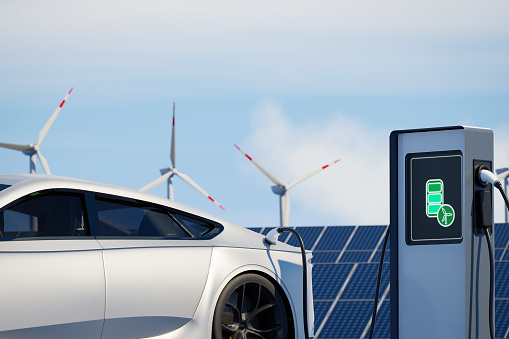
Solar-powered car that harnesses the sun's energy for extended range
Aptera Motors, an electric car maker based in California, is making rapid progress on its innovative new car, named “PI 2.” What sets this vehicle apart is that it doesn’t need to be plugged into an outlet to charge—it can be fully battery powered by the sun.
With three square meters of solar panels installed on the car’s surface, the vehicle can run up to 40 miles (≈ 64 km) per day on pure sunlight, that’s 11,000 miles (≈ 17,702 km) per year. If weather conditions fail to offer sufficient sunlight, Aptera provides users the possibility to charge the vehicle by plugging it into an electrical source, giving it a range of 1,000 miles (1,600 km) when fully charged.
The vehicle’s sleek design, featuring a unique three-wheel configuration, allows it to move through the air with significantly less friction than most modern vehicles. It features two seats and ample trunk space.
Aptera’s vehicle is now entering a phase of high-speed track testing to validate its performance. Steve Fambro, Aptera’s Co-Founder & Co-CEO expresses that Aptera “demonstrates real progress toward delivering a vehicle that redefines efficiency, sustainability, and energy independence.”
Want to learn more? Read more about PI 2

New battery technology that enables rapid charging and extended range for electric cars
California-based Amprius Technologies is making waves in the electric vehicle (EV) industry with its groundbreaking battery technology. By utilizing a silicon anode instead of the conventional graphite, Amprius’ lithium-ion batteries achieve unmatched energy density and faster charging times.
These batteries can reach a 90% state of charge in just 15 minutes, surpassing the 80% target set by the United States Advanced Battery Consortium (USABC). Impressively, the batteries also achieve 80% in under six minutes, a potential game-changer for reducing EV charging times to rival internal combustion engine cars.
The new cells boast a specific energy of 360 Wh/kg and a power density of 1,200 W/kg, offering significantly extended ranges for EVs. In addition to delivering exceptional performance, the batteries operate efficiently across extreme temperatures and have passed rigorous safety tests, including the military-standard nail penetration test.
Amprius’ innovative design features silicon nanowires in the anode, enabling faster charging and a longer lifespan, with the company targeting 1,000 charge cycles. With support from USABC and validation efforts underway, this technology marks a significant milestone in the evolution of EV batteries, paving the way for safer, more efficient, and longer-lasting battery electric vehicles BEVs.
Want to learn more? Read more about Amprius Batteries
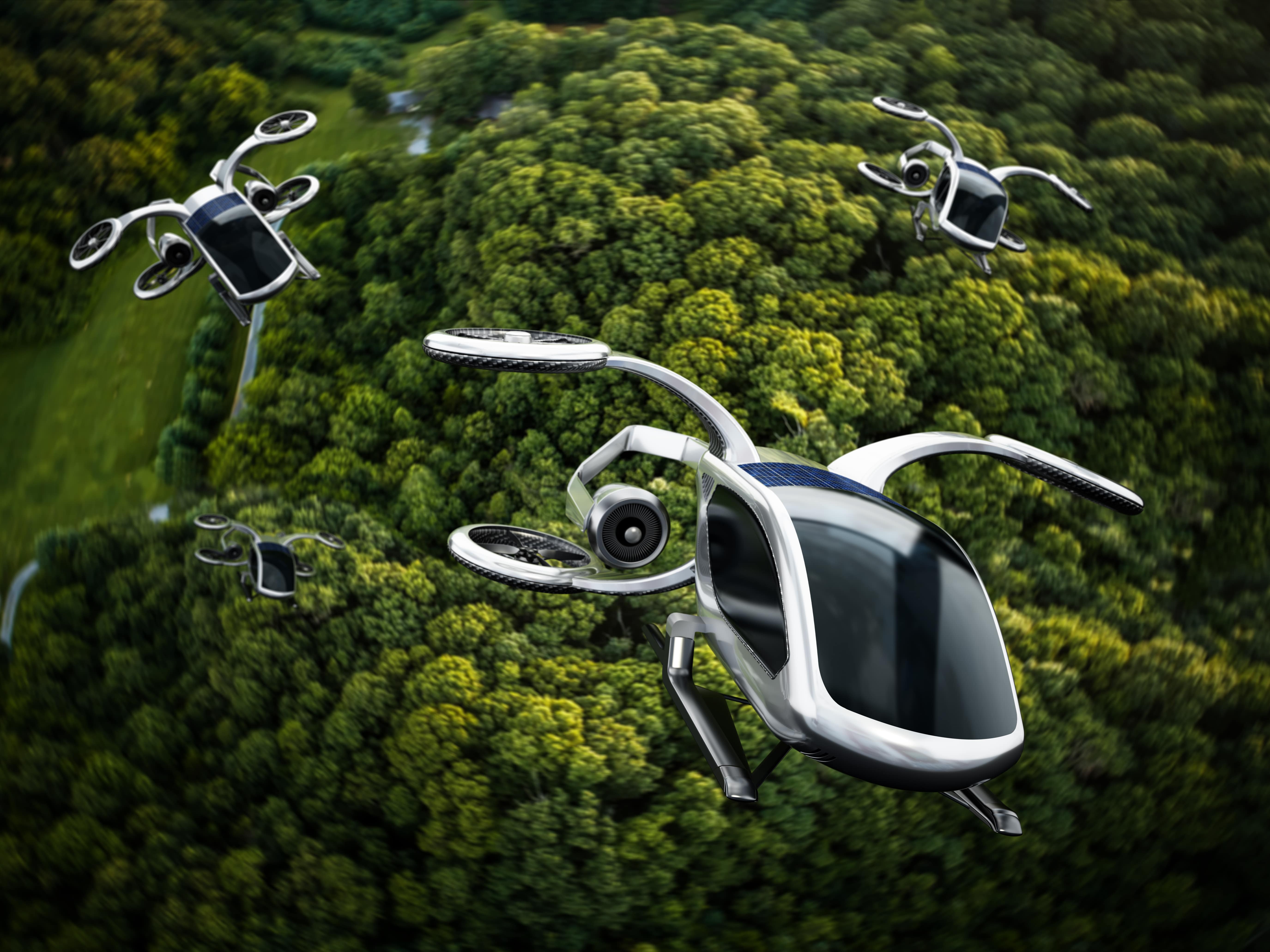
Electric air taxi, an innovative transport solution for urban mobility
Toyota, in partnership with the US-based Joby Aviation, recently showcased the potential of electric air taxis with an inaugural international exhibition flight at the Higashi-Fuji Technical Center in Japan.
The fully electric, five-seater aircraft, capable of speeds up to 200 mph, represents a breakthrough in clean, efficient, and low-noise urban air mobility. This new technology aims to address critical transportation challenges by reducing traffic congestion, offering emissions-free travel, and providing flexible solutions for urban and rural areas.
Toyota has played a key role in the development of Joby’s air taxi, leveraging its expertise in automotive manufacturing to supply critical components and support certification efforts. This collaboration reflects Toyota’s broader vision of transforming mobility and delivering sustainable innovative transport solutions.
The event, attended by prominent stakeholders including Akio Toyoda, Chairman of Toyota Motor Corporation, and Japan’s Civil Aviation Bureau, marked a milestone in advancing air mobility. With over $894 million invested in Joby, Toyota is committed to bringing these innovative aircraft into commercial production. Joby’s electric air taxi not only redefines efficiency but also signals a transformative future in mobility, where air travel becomes a practical, everyday option for cities worldwide.
Want to learn more? Read more about Joby Electric Air Taxi
Conclusion
The landscape of electric vehicle technology is evolving rapidly, driven by groundbreaking innovations that promise to reshape the way we travel.
From solar-powered cars to rapid-charging batteries and electric air taxis, these advancements reflect the industry’s commitment to sustainability, efficiency, and convenience. And this is just the beginning. The horizon is filled with endless possibilities.
The future of mobility is electric—and it’s arriving faster than we imagined.
