Focus Report with Amazon Robotics

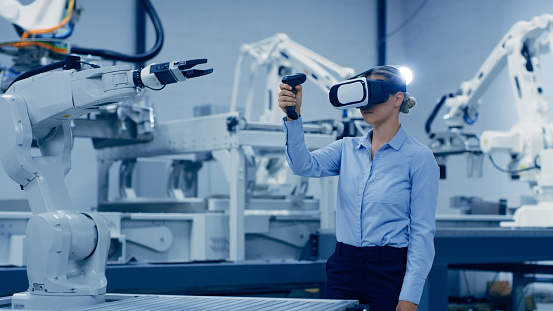
Robotics is reshaping the logistics industry and beyond, accelerating automation across every level of the supply chain. As global operations face increasing pressure to become faster, more flexible, and more resilient, robotics offers a transformative path forward.

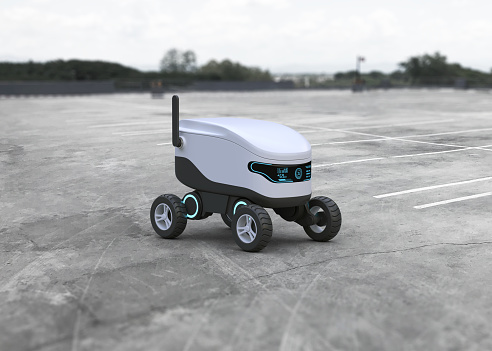
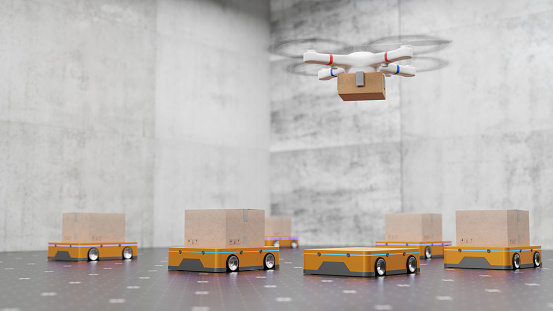
From autonomous mobile robots to fully automated warehouses, this technological shift is driving greater efficiency, improved accuracy, and smarter collaboration between humans and machines. With major players like Amazon already processing the majority of their orders with robotic support, the impact is both significant and growing.


In our second Focus Report, you’ll discover how robotics is being deployed across logistics, the strategic decisions driving automation, and what the future of human–machine collaboration could look like in a rapidly evolving landscape.
>>>>> Click here to read the rapport

logos

New Robot Revolutionizes Automation

Proxie, a groundbreaking mobile robot from Cobot, is redefining workplace automation by prioritizing efficiency, affordability, and human collaboration. Unlike costly humanoid robots, industrial robots like Proxie blend advanced artificial intelligence with a functional design tailored to load and unload materials in industries like healthcare, logistics, and manufacturing, without human intervention.


Its standout features include versatile grippers, seamless 360-degree mobility, and AI-powered situational awareness. Trusted by leaders such as Moderna and Mayo Clinic, Proxie has already logged over 5,000 operational hours. Designed to assist rather than replace humans, Proxie exemplifies a shift in robotics—focusing on practical, scalable automated solutions for everyday tasks in diverse industries.


Want to learn more? Read more about Proxie here

robot

Robots Enhance Offshore Energy

Autonomous robots are advancing offshore energy operations by overcoming the challenges posed by turbulent seas. Researchers at the University of Edinburgh have developed innovative computational tools that enable robots to predict wave disturbances and maintain stability, improving safety and reducing energy costs.


Using real-time data from wave-detecting sensors tethered to the seafloor, these robots can operate efficiently near the surface and at greater depths. The system, tested in simulated North Sea conditions, holds promise for automating maintenance tasks, such as repairing offshore equipment. This breakthrough could transform offshore energy operations, making clean energy production more cost-effective and sustainable.


Want to learn more? Read more about Offshore Robotics

robot research

All-Terrain Quadruped Robot

Deep Robotics has unveiled the Lynx quadruped robot, a groundbreaking innovation capable of navigating rugged terrain at high speeds. Equipped with wheels instead of traditional feet, Lynx combines agility with stability, tackling 50-degree inclines, rocks, and walls effortlessly. Beyond its impressive mobility, the robot performs complex tasks such as backflipping and transitioning between two- and four-legged stances.


Initially designed for industrial applications like security inspections and disaster response, Lynx uses advanced sensors, including LiDAR, for precise navigation. With a history of successful field trials and strong partnerships, Deep Robotics is solidifying its role as a leader in versatile, high-performance robotic technology.


Want to learn more? Read more about the Quadruped Robot

all terrain robot

Flying Robot

SeoulTech researchers unveiled the Palletrone, a new robotic hovercart redefining aerial cargo transport. Designed for seamless human-robot interaction, Palletrone operates like a flying shopping cart, enabling users to steer it with precision via a handle. Its cubic protective enclosure, eight actuators, and innovative control system ensure stability even with unevenly loaded cargo.


This advanced multirotor platform overcomes traditional obstacles like stairs, making it ideal for logistics and urban applications. Although currently limited to lighter loads, Palletrone’s potential extends to picking and packing, filming, and beyond, showcasing the transformative role of robotics in storage and retrieval systems.


Want to learn more? Read more about the Palletrone

flying robot

Pudu Robotics Unveils PUDU D9

The PUDU D9, unveiled by Chinese firm Pudu Robotics, is a groundbreaking humanoid robot designed for versatile applications. With a bipedal design enabling speeds of 2 m/s and the ability to navigate stairs, slopes, and urban terrains, the D9 mimics human-like mobility. Its dexterous DH11 hand and dual 7-degree-of-freedom robotic arms enhance precision, handling tasks up to 44 pounds.


Powered by advanced AI and sensors, it performs real-time 3D mapping for autonomous navigation and human-level multimodal interactions. Targeting industries like healthcare, retail, and logistics, the D9 redefines service robotics with practical intelligence and adaptability for diverse environments.


Want to learn more? Read more about PUDU D9

PUDU D9

Conclusion

Robotics are transforming logistics with innovative solutions like material-handling robots, offshore energy automation, and versatile quadruped designs. 


From autonomous unloading systems and autonomous mobile robots arms to flying cargo platforms, these advancements enhance efficiency, sustainability, and adaptability.


 As robotics adoption accelerates, the logistics industry is poised for a smarter, more automated future, reshaping supply chains and paving the way for greater innovation in managing goods.

Robotics